
Trusting the Signal Without Thinking About It
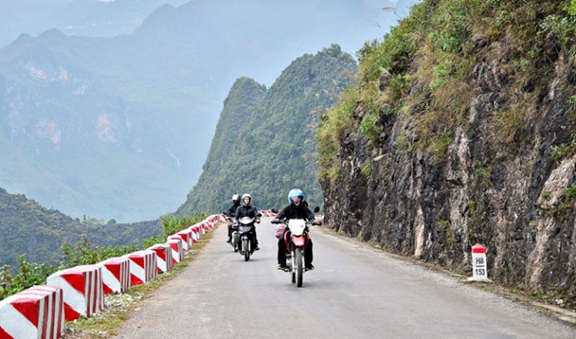
There’s a point in every journey where you stop planning and start moving.
It usually doesn’t announce itself. It happens quietly — when you no longer check directions every few minutes, when you stop asking whether the next turn will lead somewhere useful, when the road feels less like a question and more like an invitation.
That’s where I found myself in Vietnam.
Not in a city, but somewhere between places. The kind of stretch where landmarks thin out and choices feel more open-ended. I wasn’t following a strict itinerary anymore. I was following momentum.
And momentum depends on trust.
At first, the trust was practical. Directions loaded when I needed them. Messages went through without hesitation. Calls connected without that half-second pause that makes you brace for disappointment. Nothing dramatic — just consistency.
Before the trip, I had set things up with Viettel eSIM by Vietnam’s leading mobile provider in place. I didn’t think of it as a decision that would shape the journey. It felt more like background preparation, something you do so you don’t have to think about it later.
That turned out to be exactly the point.
As the days passed, I noticed how rarely I questioned whether my phone would work. In smaller towns, signal held steady. Along longer roads, navigation stayed reliable. When timing mattered, calls went through cleanly. I didn’t have to hedge my plans or build backups around connectivity.
Vietnam moves quickly, but not always predictably. Conversations turn into detours. Detours turn into longer days. When that happens, you either adapt smoothly — or you start negotiating with friction.
I found myself doing neither. I simply kept going.
One afternoon, I stopped briefly to check my route before continuing on. The phone responded immediately. I glanced, locked the screen, and put it back in my pocket. The pause lasted seconds. It didn’t interrupt the flow of the day.
Later, I spoke with another traveler who described a different rhythm. They planned routes carefully, saved maps offline, and checked signal availability before leaving urban areas. They weren’t struggling — but they were managing.
Managing takes attention.
I realized how little attention I had given connectivity at all. It had become infrastructure rather than a task. Something stable enough to fade into the background.
That shift changes how a place feels. When you’re not anticipating dropouts or delays, your focus moves outward. You notice the landscape more. You linger longer. You follow suggestions without calculating risk.
By the end of the trip, the signal had become something I trusted without consciously acknowledging. It wasn’t about speed or features. It was about reliability — the kind that lets you forget it exists.
Travel doesn’t always reward optimization. Sometimes it rewards decisions that remove the need to optimize at all.
In Vietnam, where distance expands easily and plans evolve as you go, that kind of quiet trust makes movement feel natural. You don’t rush. You don’t hesitate. You just keep going, knowing that when you need to check, call, or confirm — the signal will be there.
And when the signal stops being something you think about, the journey opens up in ways you don’t expect.


Leave a reply




-
Appropriate Color Collocation For Summer time Clothing
Summer time time time can be used. Isn’t it here i am ...